
Pinterest and Amazon Influencer Programme 2026
Some links on this site are affiliate links, meaning I may earn a small commission at no extra cost to you. I only recommend products I trust and use myself. Thank you for supporting my content!
Pinterest has just announced a new partnership with the Amazon Influencer Program, and it could open up some interesting opportunities for creators.
If you already use Pinterest to drive traffic, recommend products, or share ideas with your audience, this update makes it even easier to turn that content into income.
In this post I’m going to break down:
What the Pinterest and Amazon partnership actually means
How creators can use affiliate links on Pinterest
Why Pinterest is uniquely positioned for shopping and discovery
Because unlike many platforms, Pinterest isn’t just about views… it’s about taking action.
Why Pinterest is so powerful for driving traffic
Pinterest isn’t really social media, it’s a visual search engine which means that people come to Pinterest with intent.
They’re searching for ideas like:
outfit inspiration
recipes
home projects
product recommendations
business tips
This means your content isn’t competing in a fast-moving feed.
Instead, your pins can appear in search results months or even years after you post them, continuing to generate Pinterest views, saves and outbound clicks over time.
Every pin becomes another entry point for people to discover your content.
And that’s what makes Pinterest such a powerful platform for evergreen traffic.
Pinterest is becoming a major shopping platform
Pinterest now has over 600 million monthly users, and many of them are actively planning projects or purchases.
In fact, Pinterest shared some interesting data about shopping behaviour on the platform:
85% of users start a new project on Pinterest
3 out of 5 weekly users say it’s their go-to place for shopping inspiration
61% say they ended up spending more than expected after browsing Pinterest
So while Pinterest is still known as a place for inspiration, it’s also increasingly a place where people move from:
idea → discovery → purchase
That’s where creators come in - you’re the ones sharing the ideas that lead people to the products they want to buy.
What the Pinterest Amazon Influencer Partnership actually does
Pinterest has partnered with the Amazon Influencer Program to make monetisation easier for creators.
There are three key parts to this update.
1. You can use Pinterest to apply for the Amazon Influencer Program
Creators can now apply for the Amazon Influencer Program using their Pinterest account. (This is being rolled out - keep checking back if you don't have it yet)
If accepted, you get your own Amazon storefront where you can curate product recommendations for your audience. If you don't get accepted via Pinterest, you can apply via another social media platform and then add your link to Pinterest later.
Think of it as your own mini Amazon shop filled with products you recommend.
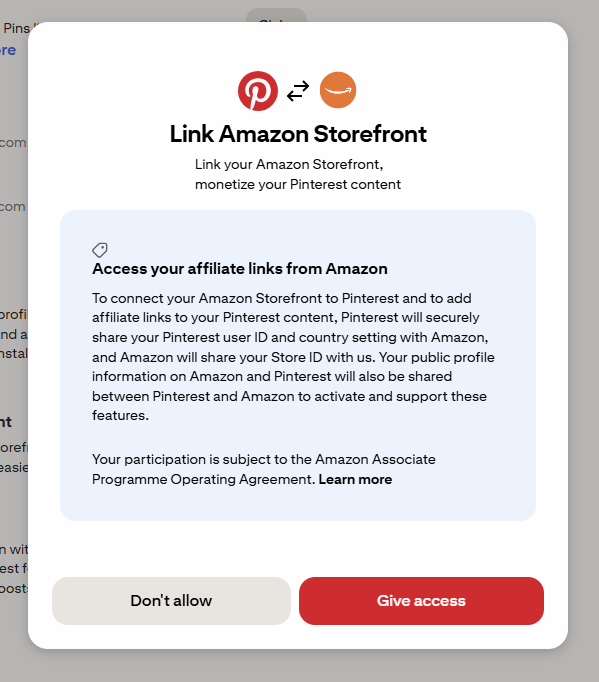
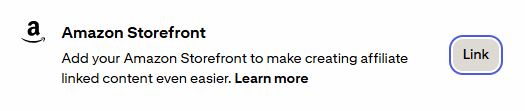
2. You can link your Amazon Storefront to your Pinterest profile
Once approved for the influencer program, you can link your Amazon storefront directly to your Pinterest profile.
This means your audience can easily discover and shop the products you recommend.
For creators who regularly share:
product roundups
tutorials
outfit ideas
home decor inspiration
craft supplies
This creates a much smoother path from inspiration to purchase.
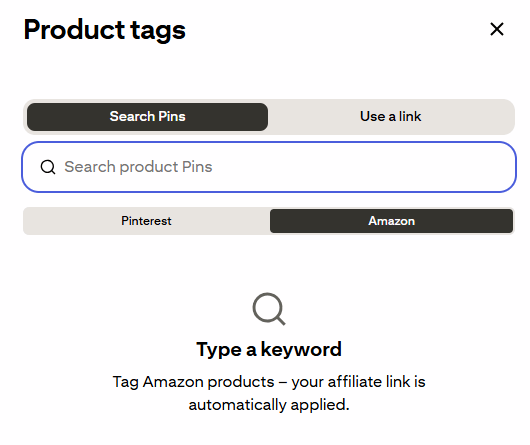
3. You can tag Amazon products in Pinterest Pins
The most exciting feature is the ability to tag Amazon products directly in your pins.
These tagged products automatically become affiliate links.
So when someone clicks through and purchases the product, you earn a commission.
Pinterest encourages creators to build idea-first pins rather than simply posting product images.
For example:
a full outfit look with tagged products
a “tools I use” post for your niche
a skincare routine featuring specific products
a home styling idea with linked decor
This approach tends to generate more Pinterest saves and outbound clicks, because the pin is focused on the idea rather than just the product.
You can add affiliate links to old Pinterest Pins
You can add product tags to older pins that are already performing well.
If you have pins that are already generating:
Pinterest traffic
saves
outbound clicks
You can go back and add relevant Amazon products.
This is a great way to turn existing Pinterest traffic into income without creating brand new content.
Sometimes the best opportunities are hiding in the pins you’ve already published.
Followers don’t matter on Pinterest
Followers aren’t the most important metric on the platform.
That’s because Pinterest distributes content based on:
search intent
engagement signals
relevance
If someone searches for a topic related to your pin, Pinterest can show your content even if that person has never heard of you before.
That’s why the most important metrics to focus on are:
Pinterest saves
Outbound clicks
Pinterest views
These signals tell Pinterest that your content is useful and worth showing to more people.
Pinterest content grows over time
Another big advantage of Pinterest is the longevity of content.
Unlike platforms where posts disappear within hours, Pinterest pins can continue showing up in search results long after they’re published.
That means every pin you create becomes part of a growing library of content.
Over time, this library gives people more ways to discover your ideas, your website, and your affiliate recommendations.
It’s one of the reasons Pinterest is such a powerful platform for creators who prefer evergreen marketing instead of constant posting.
Want to make seasonal & evergreen Pinterest marketing easier?
If you’d like a simple way to get your Pinterest foundations right, including SEO, keywords, pin optimisation and planning grab my free Pinterest Starter Kit.
It’s perfect for beginners and for anyone who wants to tidy up their strategy before the busy season hits.
👉 Download your free Pinterest Starter Pack here.
(It’ll help your festive pins reach the right people and keep working long after Christmas is over.)
Pin Me!
Was this blog post helpful? Pin this blog to one of your boards to share it with your community and read it again later. I appreciate every single pin and share that I receive. 🧡
Read More...


Copyright © Faye Strange Digital 2024 | All Rights Reserved